
Tipping is not just about generosity — it is a complex economic system that determines how millions of hospitality workers earn their living. Understanding the history, psychology, and wage structures behind tipping makes you a more informed traveler and a more conscientious patron.
Why the U.S. Tipping System Evolved
The American tipping system did not emerge from a culture of generosity. Its origins are rooted in inequality, labor exploitation, and deliberate policy choices that shifted the cost of paying workers from employers to customers. Understanding this history is essential to grasping why tipping in the United States feels so different from the rest of the world.
Tipping first arrived in America in the late 1800s, when wealthy Americans returning from European grand tours brought the aristocratic practice back with them. In European courts, gratuities were given by nobles to servants as a mark of status and noblesse oblige. American elites adopted the habit to signal worldliness, but the practice was initially met with fierce resistance. Critics denounced tipping as un-American and anti-democratic — a relic of feudal class systems that had no place in a republic built on equality.
The practice became entrenched, however, through its intersection with race. After the Civil War, the newly freed Black workforce entered the hospitality industry in large numbers — as Pullman porters on railroads, hotel bellhops, and restaurant servers. Employers in these industries seized on tipping as a way to avoid paying Black workers wages entirely, arguing that tips from customers constituted sufficient compensation. This practice effectively transferred the financial burden of paying workers from business owners to patrons, while keeping labor costs near zero.

The system was codified into law during the New Deal era. When the Fair Labor Standards Act of 1938 established a federal minimum wage, the restaurant industry successfully lobbied for an exemption. Tipped workers were excluded from minimum wage protections, creating a separate and lower wage floor that persists to this day. The federal tipped minimum wage has been frozen at $2.13 per hour since 1991 — more than three decades without an increase — while the standard federal minimum wage, though itself criticized as inadequate, has risen to $7.25 per hour.
During Prohibition (1920–1933), the economics of hospitality shifted dramatically. Restaurants that had relied on alcohol sales for profit margins suddenly lost their most lucrative revenue stream. Many establishments leaned even more heavily on the tipping model to keep prices low while paying workers as little as possible. When Prohibition ended, the tipping habit was thoroughly embedded in American dining culture and proved impossible to reverse.
The tipped minimum wage in the United States has remained at $2.13 per hour since 1991 — over 30 years without any increase, even as the cost of living has more than doubled.
Service Charge vs. Discretionary Tip
One of the most confusing aspects of global tipping culture is the distinction between a service charge and a discretionary tip. Though both involve paying extra for service, they function very differently in practice, and misunderstanding the distinction leads to either under-tipping or double-tipping when traveling abroad.
A service charge is a mandatory fee set by the establishment and added to your bill automatically. It is determined and controlled by the business, not the customer. In France, for example, service is included by law (service compris), meaning a 15% service charge is built into every menu price. The customer sees an all-inclusive price and is not expected to add anything further, though leaving a few coins for exceptional service is a welcome gesture. In the United Kingdom, many restaurants add a discretionary 12.5% service charge to the bill — you can ask for it to be removed, but most patrons leave it.
A discretionary tip is a voluntary payment that the customer decides on independently. In the United States, there is no service charge built into prices. Instead, the customer is expected to calculate and add a tip of 18–25% on top of the billed amount. This model places the burden of calculating fair compensation on the customer and introduces significant income variability for workers.
The critical difference for travelers is this: in service-charge countries, your bill already reflects the cost of labor. In discretionary-tip countries like the United States, the menu prices do not account for labor costs — those are externalized to the customer through the tipping expectation. Understanding which system you are operating in prevents both the awkwardness of stiffing a worker who depends on tips and the wastefulness of double-paying in countries where service is already included.
- France: Service included by law (15%). Additional tip optional — round up or leave small change.
- United Kingdom: Discretionary 12.5% service charge common at restaurants. Not expected at pubs.
- United States: No service charge. 18–25% tip expected and socially mandatory.
- Australia: No service charge, no tipping expected. Workers earn a living wage ($23.23 AUD minimum).
- Japan: No tipping. Service excellence is considered part of the job. Tipping may cause confusion.
Wage Structures Around the World
The way hospitality workers are compensated varies enormously across countries, and these wage structures directly determine whether tipping is a social necessity or a voluntary bonus. The United States sits at one extreme, with the lowest base wages and the highest tipping expectations. Countries like Australia and Denmark sit at the other, with high minimum wages and virtually no tipping culture.
| Country | Minimum Wage (Hospitality) | Tipping Expectation | Model |
|---|---|---|---|
| United States | $2.13/hr (tipped) — $7.25/hr (standard) | 18–25% expected | Tip-dependent |
| Canada | C$15.00–$17.40/hr (varies by province) | 15–20% expected | Tip-supplemented |
| United Kingdom | £11.44/hr (National Living Wage) | 10–12.5% appreciated | Service charge common |
| Germany | €12.41/hr | 5–10% round-up | Fair wage + small tip |
| France | €11.65/hr (SMIC) | Included — extra optional | Service included |
| Australia | A$23.23/hr | Not expected | Living wage |
| Japan | ¥1,004–1,113/hr (varies by prefecture) | Not expected — may offend | Service-inclusive |
| Denmark | ~DKK 130/hr (union-negotiated) | Not expected | Living wage |
| Mexico | MXN 248.93/day (~$14 USD/day) | 10–20% expected | Tip-supplemented |
| Thailand | THB 330–370/day (~$9–10 USD/day) | Appreciated, not required | Low wage + optional tip |
The table above reveals a clear pattern: the lower the base wage, the higher the social pressure to tip. In countries where hospitality workers earn a living wage through their hourly pay, tipping is either unnecessary or a modest gesture of appreciation. In countries where employers are legally permitted to pay workers well below the cost of living — as in the United States — tipping becomes an obligation that effectively subsidizes the employer's payroll.
An American bartender earning the federal tipped minimum wage of $2.13 per hour would need to work approximately 15 hours to earn what an Australian bartender makes in a single hour at A$23.23 — before tips are factored in.
How Tipping Impacts Bartender Income
For bartenders in the United States, tips are not a bonus — they are the job. The typical American bartender derives 60–80% of their total income from gratuities, with base wages constituting a small fraction of their take-home pay. This creates a compensation model that is simultaneously lucrative and precarious.
On a busy Friday night at a popular cocktail bar in New York City, a skilled bartender can earn $300–600 in tips during a single shift. Over the course of a week, top-earning bartenders in major cities may take home $1,500–2,500 in tips alone. Annual incomes for experienced bartenders in high-volume venues can reach $60,000–80,000, rivaling many white-collar salaries. At exclusive nightclubs and luxury hotel bars, six-figure earnings are not unheard of.

However, this earning potential comes with significant downsides. Income volatility is the most immediate concern. A bartender's earnings fluctuate wildly based on the day of the week, the season, the weather, local events, and even the mood of individual customers. A Tuesday afternoon shift might yield $40 in tips, while a Saturday night at the same venue brings $400. This unpredictability makes budgeting, securing loans, and planning for the future exceptionally difficult.
Research has also documented persistent gender disparities in tipping. Studies published in the Journal of Applied Social Psychology have found that female servers receive higher tips than male servers in many contexts, but this advantage is often contingent on physical appearance and perceived attractiveness — a dynamic that introduces uncomfortable incentives into the workplace. Male bartenders, meanwhile, tend to earn more at high-volume nightlife venues where speed and physical endurance command higher-spending crowds.
The lack of benefits compounds these issues. Because tips are variable and often partially unreported, tipped workers frequently have reduced access to unemployment insurance, disability coverage, Social Security contributions, and retirement savings compared to salaried workers earning the same effective income. The feast-or-famine nature of tip-based income also means that slow seasons, economic downturns, or personal illness can create immediate financial crises.
The Psychology of Tipping
If tipping were purely rational, customers would tip based on service quality alone. But decades of behavioral economics research have shown that tipping behavior is driven far more by social psychology, emotional impulses, and cognitive biases than by any objective assessment of service.
Social pressure and conformity are the primary drivers of tipping in the United States. People tip because they are expected to, and the fear of being judged — by the server, by dining companions, by society at large — exerts powerful influence. Research by Michael Lynn at Cornell University, one of the foremost scholars of tipping behavior, has demonstrated that the correlation between service quality and tip size is surprisingly weak. Studies consistently find that service quality explains only 1–5% of the variation in tip amounts. Factors like the weather, the diner's mood, the server's gender, and even whether the server touches the customer's arm have a larger measurable effect on tip size than the actual quality of service provided.
Reciprocity and guilt play equally important roles. When a server provides personal attention, remembers your name, or offers a complimentary item, the psychological principle of reciprocity compels you to respond with a larger tip. Conversely, guilt prevents most people from leaving a small tip even after poor service. The act of writing a low tip amount on a receipt or leaving insufficient cash on the table triggers discomfort — not because of the service received, but because of the social implications of the act itself.
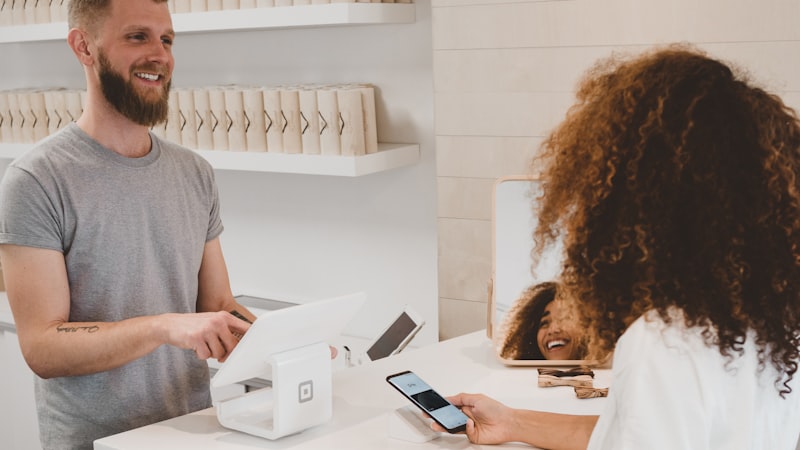
The "pain of paying" is another well-documented phenomenon. Behavioral economists have shown that paying with cash activates neural pain responses that paying by credit card does not. This is why digital payment systems, which further abstract the payment from physical money, tend to produce higher tips. When a tablet screen at a coffee counter presents you with options of 20%, 25%, or 30%, the social pressure of the barista watching combines with the painlessness of tapping a button to produce tips that would likely not occur if the same customer had to count out physical bills.
Cultural conditioning also shapes tipping behavior profoundly. Americans who grow up in a tipping culture internalize the norms so deeply that not tipping produces genuine psychological distress. Japanese visitors to the United States, conversely, may experience confusion or discomfort at the tipping expectation because their own cultural conditioning associates good service with professional pride rather than financial incentive. Neither response is more "correct" — both are products of the environments in which people were raised.
Ethical Considerations When Traveling
The global variation in tipping customs creates genuine ethical questions for international travelers. Should you tip according to your home country's norms, or adapt to local customs? The answer is nearly always to follow local practice — but the reasoning behind that answer matters.
Imposing American-style tipping in countries where it is not customary can have unintended consequences. In Japan, leaving money on the table after a meal may be interpreted as an insult, implying that the server needs charity or that their employer does not pay them fairly. In Scandinavian countries, where hospitality workers earn strong union-negotiated wages, excessive tipping can create awkward power dynamics and undermine the egalitarian social model that ensures fair compensation without gratuities.
Conversely, refusing to tip in countries where workers depend on gratuities — whether the United States, Mexico, or parts of Southeast Asia — causes real financial harm. A traveler who declines to tip an American bartender on principle is not making a political statement against the tipping system; they are simply depriving a worker of earned income within the system that currently exists. Advocacy for systemic change and fair participation in current norms are not mutually exclusive.
- Research before you travel. Spend five minutes learning the tipping norms of your destination before you arrive. This avoids both embarrassment and harm.
- When in doubt, ask locals. Hotel concierges, tour guides, and fellow travelers can quickly clarify local expectations.
- Err on the side of generosity in low-wage countries. In destinations where service workers earn very low base wages, a modest tip that feels insignificant to you may represent a meaningful portion of their daily income.
- Do not weaponize tips. Using the threat of a reduced tip to bully or control service workers is unethical regardless of the country.
- Respect the local system. If a culture does not tip, do not insist on tipping. If a culture does tip, participate fairly.
The Future of Tipping
The tipping landscape is shifting, driven by public frustration, industry experimentation, and technological change. While a complete elimination of tipping in the United States remains unlikely in the near term, several trends are reshaping how and when customers are expected to tip.
The no-tip movement gained national attention in 2015 when Danny Meyer, founder of Union Square Hospitality Group, announced that his restaurants would eliminate tipping and raise menu prices to pay staff a higher base wage. The move was praised by labor advocates and generated significant media coverage. However, by 2020, Meyer partially reversed course, reintroducing a "hospitality included" surcharge model, acknowledging that the transition was more difficult than anticipated. Other restaurants that experimented with no-tip models reported challenges with staff retention, as top-performing servers often earned more under the tipping system than under flat-rate compensation.
Service-included pricing represents a more sustainable middle ground. Rather than eliminating tips, some establishments add a transparent service charge of 18–22% to every bill, distribute it equitably among staff, and discourage additional tipping. This model is already standard in much of Europe and is gaining traction at progressive American restaurants. It provides workers with predictable income while giving businesses the ability to ensure fair distribution between front-of-house and back-of-house staff.

Tip fatigue is a growing phenomenon. The proliferation of digital point-of-sale systems has introduced tipping prompts at businesses where tips were never historically expected — fast-food counters, self-serve frozen yogurt shops, retail stores, and even automated kiosks. A 2023 survey by the Pew Research Center found that 72% of Americans believe tipping culture has gotten out of control, and a majority reported feeling pressured to tip in situations where they previously would not have. This backlash may ultimately accelerate the shift toward service-included pricing as consumers push back against what they perceive as "tipflation."
Digital and mobile tipping is also changing the mechanics of gratuity. Apps that allow customers to tip service workers directly via QR codes or NFC — bypassing the employer entirely — are gaining adoption in hotels, salons, and delivery services. These platforms give workers immediate access to their tips without employer deductions and provide customers with a frictionless way to show appreciation. However, they also raise questions about tax reporting and the further normalization of tipping in non-traditional contexts.
The most likely future is not one where tipping disappears entirely, but one where its scope is redefined. As more states raise their tipped minimum wages (California, Washington, Oregon, Montana, Minnesota, and Alaska already require full minimum wage for tipped workers), the urgency of tipping as a survival mechanism will diminish. Over time, tipping may evolve from an obligation that subsidizes low wages into what it is in most of the world: a genuine, voluntary expression of gratitude for exceptional service.
According to a 2023 Pew Research Center survey, 72% of Americans say tipping culture in the U.S. has gotten out of control, and the majority feel pressured to tip in situations where tipping was never previously expected.
Frequently Asked Questions
The U.S. tipping system evolved from post-Civil War practices when formerly enslaved workers in hospitality were paid nothing by employers and relied entirely on customer gratuities. This was codified during the New Deal era when the restaurant industry lobbied for a lower "tipped minimum wage," allowing employers to pay as little as $2.13 per hour federally. Over time, tipping became socially mandatory to compensate for these artificially low base wages. Today, most American bartenders and servers earn 60–80% of their income from tips.
A service charge is a mandatory fee added to your bill by the establishment, typically 10–20%, and is controlled by the business — it may or may not go directly to the staff. A tip (gratuity) is a voluntary payment made directly to the service worker at the customer's discretion. In countries like France and Australia, service charges are built into menu prices, making additional tipping optional. In the U.S., tips are discretionary but socially expected as part of the worker's compensation.
In the United States, bartenders typically earn 60–80% of their total income from gratuities. A bartender at a busy urban cocktail bar can earn $200–$600 per shift in tips on top of a base wage of $2.13–$7.25 per hour. Total annual income for U.S. bartenders ranges from $25,000 to $80,000 depending on location, venue type, and shift schedule. By contrast, bartenders in Australia earn $22–$28 AUD per hour in base wages with minimal tipping.
The most ethical approach is to follow local customs rather than imposing your home country's tipping norms. In countries like Japan, tipping can be seen as insulting. In nations with fair-wage models like Australia and Scandinavia, tipping is unnecessary because workers already receive a living wage. In countries with low service-sector wages — parts of Latin America, Southeast Asia, and Eastern Europe — modest tips are genuinely helpful and appreciated. Research your destination's norms before you travel.
A complete elimination of tipping in the U.S. is unlikely in the near term, as experiments like Danny Meyer's no-tip restaurants have proven difficult to sustain long-term. However, the trend is moving toward service-included pricing, where a transparent service charge replaces voluntary tipping. As more states raise their tipped minimum wages and public frustration with "tipflation" grows, tipping may gradually evolve from a payroll subsidy into a voluntary gesture of appreciation — as it already functions in most of the world.
Last updated: March 3, 2026